Story
The Quiet Kid in the Back of the Class: One Huntsville Mother on Getting Her Son Tested for Dyslexia
2026-09-18 · The Dyslexic Difference
He was not the kid acting out. That was the problem.
There is a version of a struggling student that schools are built to notice. He talks back. He will not sit still. He makes it impossible to ignore him.
One Huntsville mother's son was the other version. He listened. He followed directions as best he could. He did not jump on tables or push or tug. And because he was quiet and polite and behind, he stayed behind.
In her words: My child has no behavior issues. He is not the one acting out in class. Because it is overlooked, you have to have someone who is going to be able to push and advocate.
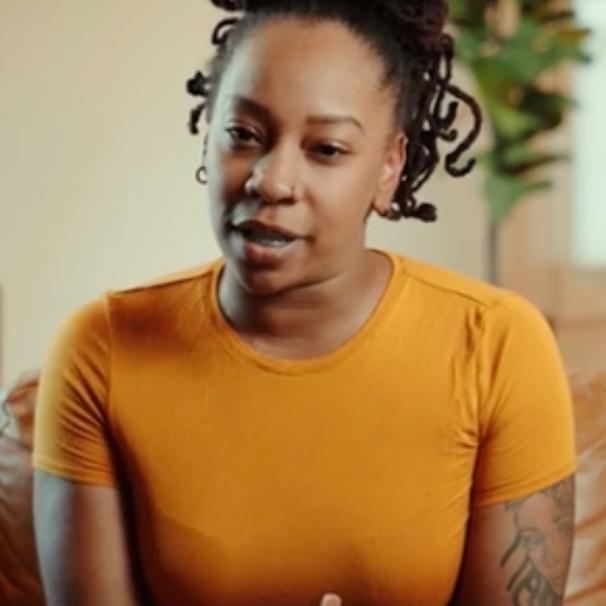
She is part of Faces of Dyslexia, a series of interviews with local families supported by The Dyslexic Difference, the Huntsville nonprofit funded in part by every bag and cup sold at Angel's Island Coffee. Her full interview is worth ten minutes of anyone's time. What follows is what her experience can tell other parents in Madison County who are sitting where she was sitting four years ago.
Do not accept the developmental lag explanation
Her son's reading trouble surfaced when schools reopened after COVID. The explanation she was given will sound familiar to a lot of Huntsville parents: a lot of children are like that right now, everyone is getting back in the swing of things, he will catch up.
So they waited. And the same subjects stayed hard. His first IEP named the symptom, reading and math, without naming the cause.
In her words: As a parent, I was not okay with that. It was not just COVID. It was not just he could not read.
That instinct matters, because the research on timing is unforgiving. Children are typically identified with dyslexia at the end of second grade or later, well after they have already spent years failing to learn to read, a gap researchers call the dyslexia paradox, according to a 2020 review published in Pediatrics, the journal of the American Academy of Pediatrics. The same review reports that when struggling early readers receive intensive intervention, 56 to 92 percent of them go on to reach average reading ability.
Reading Rockets, summarizing National Institutes of Health research, puts the trade-off in blunter terms: the window of opportunity is kindergarten and first grade, and intervention delivered in fourth grade takes roughly four times as long to produce the same gain.
What Alabama parents are entitled to ask for
Alabama has more structure around this than most parents realize.
The Alabama Literacy Act requires students in kindergarten through third grade to be given a universal reading screener. Under the Alabama Administrative Code, a school's Problem Solving Team is responsible for dyslexia-specific screening, for an intervention plan, for notifying parents of screening results and goals, and for documenting progress. Independent dyslexia evaluations that a parent brings in must be considered by that team.
What the code does not do is make a diagnosis appear. A school-based screening flags characteristics. A comprehensive evaluation by a qualified professional is what produces the diagnosis that reshapes an IEP, and in most cases families pay for that themselves.
That cost is the wall The Dyslexic Difference exists to knock down.
The sticky note, and what came after it
When a reading specialist suspected dyslexia, this mother got what most families in this position get: a phone number on a sticky note.
In her words: It gave me hope. That was the first step. The first step was hope, to understand that I was not alone.
The Dyslexic Difference funded the evaluation. The diagnosis went onto his IEP. The school placed him in SPIRE, a structured multisensory reading program, and he went to his first reading party.
Then the program paused for a few months, and his progress slid.
In her words: As soon as things slow down with dyslexia and you are not doing the same tutoring or staying on task the same way, things kind of disappear, get watered down.
That is the single most useful thing in this interview for anyone deciding where to send a donation. Testing is the door. Tutoring is the room. A family that gets the first and cannot afford the second ends up back where they started. Her son is now in tutoring three days a week, funded through the nonprofit, in middle school, where, as she describes it, they let the leash off and the intensive elementary school support is gone.
Dyslexia is not only about reading
The part of her interview that surprises people most has nothing to do with books.
She describes chores done out of order. Instructions half-absorbed. A passage read cover to cover with none of the questions answerable afterward, because the words arrived without meaning attached.
In her words: I heard you, but I did not hear everything.
What worked at home was structure, not pressure. Routines written down. The same list reread every day, even for a chore he has done a hundred times.
It also does not end. Dyslexia is lifelong, and it follows a student into science, into world history, into every subject where reading is the delivery mechanism, which is all of them. Dyslexia is the most common of all neuro-cognitive learning differences, affecting about 20 percent of the population and accounting for 80 to 90 percent of all learning disabilities, according to the Yale Center for Dyslexia and Creativity.
One in five. In any Huntsville classroom, that is four or five children.
Why this city in particular
In her words: I think it is important for us here in Rocket City to know about dyslexia, because we are an engineering city, and although the smartest people live here, those same smart people could be suffering with dyslexia.
Dyslexia has no relationship to intelligence. It occurs at every level of ability, including among gifted students, and people with dyslexia are frequently fast, creative thinkers with strong reasoning skills, according to the Yale Center for Dyslexia and Creativity. In a metro built on engineers, that is not trivia. It is a description of a lot of people's childhoods.
If you think this might be your child
A few things this mother's experience makes clear.
A quiet, compliant child can be a struggling child. Good behavior is not evidence that nothing is wrong.
A general intellectual disability label is not an answer. It is a category broad enough to tell a teacher almost nothing about how to teach your child.
Do not wait on a school to say the word. Ask the Problem Solving Team directly what the dyslexia screening showed and what the intervention plan is.
Get the testing done, and then get the tutoring started immediately. In her words: it is so important to hit the ground running with tutoring so that the difference can happen faster.
The Dyslexic Difference funds dyslexia evaluations and tutoring for local children and connects parents with resources. If you are wondering whether this describes your child, start here. If you are in a position to help another family get the answer this one got, a donation covers a real cost for a real child in this community.
And a portion of every bag and every cup sold at Angel's Island Coffee goes to exactly that.
Brewed with purpose. Part of every bag funds dyslexia testing and tutoring for local children.